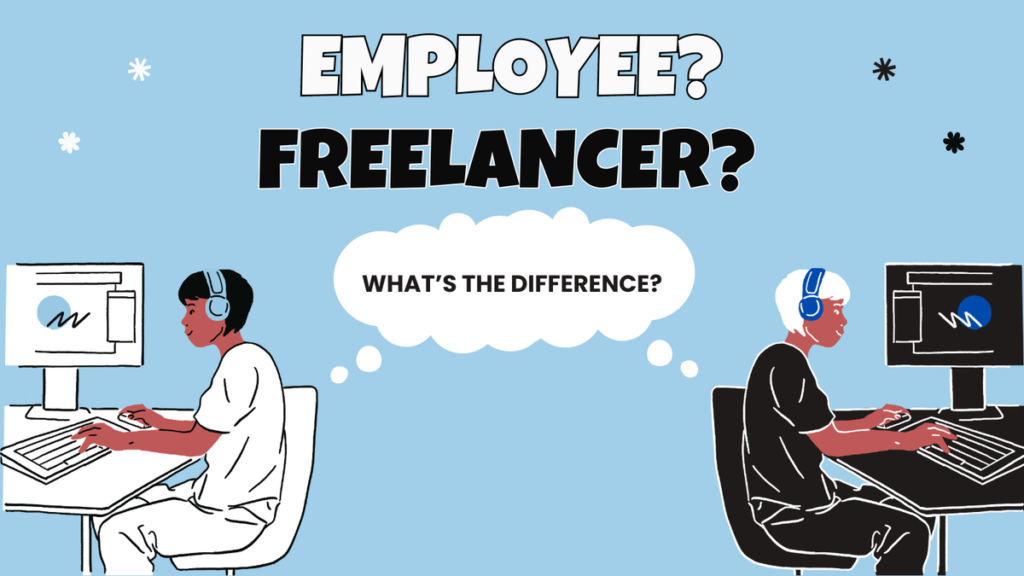
Have you ever had a conversation about work with someone who says they work from home, only to discover that your work days are very different? You may be in sweats at kitchen tables together, but one of you is juggling five different customers and the other is showing up for a daily 9 AM team sync with one boss.
This is because terminology such as “freelancing” and “remote employment” are used interchangeably all the time, but they are two different sorts of labor.
Freelancing is a style of working. Let’s get that clear first things first. In simple terms, you are a freelancer who offers services to a number of clients. Remote employment is about where you do your job, outside of a normal office atmosphere. This means that you can be a freelancer and a remote employee at the same time!
Here at VA Staff, we see people on these career pathways every day. Whether you are attempting to determine what career matches your lifestyle or you are a business owner trying to figure out how to construct your dream team, understanding these differences is a game changer.
Stop doing it all. Delegate more.
Hire a vetted virtual assistant and get your week back — starting with a free discovery call.
Here’s all you need to know about freelancing vs remote jobs.
1. Know What Freelancing Is
Basically freelance is working for yourself. Freelancing means you do not work as an employee for a corporation. Instead, you are your own little business, selling your skills and services directly to clients.
The spice of freelancing is variation. One week you may be writing blog articles for an e-commerce firm, developing a logo for a local coffee shop, and managing social media for a tech startup. You determine what services you will supply, establish your own fees, make your own contracts, set your own hours.
It’s mostly up to you to decide how you get paid. Some freelancers charge by the hour, some by project and some on a long-term retainer basis, where clients pay a fixed monthly price for continued help.
2. Understand What Remote Employment Means
Telecommuting is just completing your job from a different location than the physical office of the company. It might be your living room, a local coffee shop, a peaceful library, or a beach villa on the other side of the planet.
Keep in mind, working remotely is a location arrangement — not a job position. Remote employees may be full-time corporate staff, part-time staff, independent contractors or freelancers.
But when we say “remote employee,” we’re usually talking about someone who works for only one company, all the time. You have a definite function in the firm, with specific tasks, and regular interaction with your colleagues, but you simply happen to do it all on a computer, with an internet connection, from home.
3. Compare Job Statuses
You can see quite clearly the difference between these two methods when you look at the day to day legal and structural setup.
Freelancer:
- You are considered an independent contractor or self-employed.
- You go out and get your own clients.” You make your own clients. You have your own list.
- You probably have a handful of firms that you are partnering with to grow your income stream at any given time.
Remote employees:
- You are employed by a certain corporation or organization.
- Your management clearly defines your work and your obligations.
- Your job is subject to the employer’s official Company policies, guidelines and managerial structure.
4. Comparison of income structure
Money management is a completely other ballgame depending on which side of the fence you’re on.
Freelance:
Your revenue can vary quite a little from month to month. Sometimes you get three huge projects in a month and believe you’re a billionaire, sometimes it’s really quiet. You set your own fees with each client, whether to charge by the hour, by project or on a monthly retainer. If you want a raise, you don’t ask your boss, you raise your rates or take on more high-paying job.
Work at home:
Remote employees get a much more predictable money. You get paid on regular scheduled paydays with regular salary or hourly payments. Your pay is determined when you sign your employment contract. Some jobs can offer annual bonuses, commissions or merit raises over time.
5. Job Security Comparison
Job security is a matter of perception, and there are dangers and rewards inherent in both arrangements.
Remote employees are often more stable with income and the security of being employed regularly. If the company is successful and you are performing your job, you can count on that consistent payment every other week. But if the company you work for has financial troubles or downsizes, you are depending on one source for all your income.
Freelancers enjoy a more natural cash flow as projects end, client budgets shift and contracts vary in length. Freelancers also have a unique safety net, however: diversification. A freelancer has many clients at the same time, so if one account does not work out, his revenue will not decrease to zero. “They can just get another client to fill the gap.”
6. Compare benefits
What you receive out of it depends greatly on your classification and it is frequently one of the biggest things individuals think about when deciding a career type.
What Remote Employees Might Get:
- Paid time off (PTO) Holiday Pay Sick Leave
- Dental, Vision & Medical Insurance Options
- Retirement contributions or company matching programs
- Laptop/monitor provided by employer
- Team bonuses Professional development stipends
Typical freelancers work with:
- Buying their own health insurance policy
- Self employment budgeting and tax savings
- Start your own retirement plans and investment accounts
- Purchasing their own work equipment and software subscriptions and maintaining them
- Including unpaid leave in their personal budgeting
- Exact perks will vary significantly based on the hiring company, local labor laws, and your home country.
7. Comparison of Flexibility
Both approaches are enticing for their versatility, but that flexibility plays out differently in reality.
Freelancers frequently have greater control of their schedules. You choose the projects you want to work on, the customers you say no to and the hours you keep. If you want to work after 6 p.m. until 2 a.m. you take a random Tuesday to run errands, you can do that as long as you satisfy your project deadlines.
Remote employees are often subject to employer requirements for workday flexibility, albeit they are still spared the daily grind of commuting. Your employer might want you online during core business hours, attend scheduled Zoom meetings or follow a typical 9-5 schedule. Both alternatives provide location flexibility, but freelancing normally gives a lot more flexibility regarding time.
8. Compare Client and Employee Relationship
Your workday depends on who you work with and how you interact.
You are a service provider as a freelancer and you manage relationships with a number of clients. You treat them more like a business colleague or an outside expert. You set expectations as a team, you execute the work, you check in as needed but they are not managing your day to day process. But you have to keep your pipeline hot all the time with networking, pitching and building good relationships to get future jobs.
If you’re a remote employee, you have a clear management structure to report to. You have a direct supervisor, team members, and internal collaborators. You often join your colleagues in staff meetings and business culture initiatives to assist drive long-term organizational goals.
9. Comparison of Jobs
Your daily calendar is so much more than the creative or technical job you do. That’s the real work.
What the Freelancer Does:
- Promoting your services and finding new clientele
- Drafting proposals and negotiating contract terms
- Actually doing the deliverables to the customer.
- Issue invoices and collect payment
- Bookkeeping, Software tools, Management of administrative activities
- Dealing with client communication and revision requests
Responsibilities of Remote Employees:
- Other duties as needed
- Reporting success directly to the team leaders and supervisors.
- Take part in internal company check-ins and strategy meetings
- Follow internal processes and business policies
- Focus on internal company growth goals
10. Compare Business Admin and Taxation
Nobody’s favorite part of working is having to do taxes, but understanding the regulations helps you avoid trouble down the road.
A freelancer is self-employed therefore you are responsible for your own business records, invoicing, expense receipts and tax returns. You may have to pay anticipated taxes every quarter ( depending on your location ) and you may have to pay self-employment taxes to cover some of the social taxes that an employer would normally split with you .
For people who are distant, it’s usually a lot easier. Usually, your employer’s payroll system will compute, withhold, and send taxes directly from your paycheck.
Since tax treatment varies greatly from country to country, area to region and worker classification to worker classification, it is always prudent for all to contact their local tax legislation or a competent accountant to ensure full compliance.
11. Compare Careers Development
You grow your profession and you do it differently from place to place.
Freelancers acquire a super-fast education in deep and flexible skills by dipping their toes into diverse industries, software tools, and business strategies. Your job future is totally in your hands. If you wish to learn a new expertise, you take a course, offer it to a client, and pivot your services. Your portfolio is now a patchwork quilt of diverse project experience.
Remote employees prefer career advancement within one firm. Maybe you have internal training programs, or senior staff who mentor you, frequent performance assessments, clear avenues for promotion into management. In the end, it’s about whether you want to be self-directed or move up the organized ladder.
12. Compare Expenses and Equipment
You need the correct tools and hardware, reliable utilities and the right setup for your home office.
Many firms may equip remote employees with company-issued laptops, displays, software licenses, and, in some cases, a monthly stipend for high-speed internet or desk ergonomics. If something breaks, you can generally call in the company’s IT experts to troubleshoot or replace it for you.
Freelancers are paying for their complete tech stack out of their own pocket. You will need your own computer, backup devices, high-speed internet, specialized software and office supplies. You need to factor in these overhead expenditures, upkeep and prospective improvements, into your freelance fee structure so you don’t end up paying for it yourself.
13. Compare Workloads
How you manage that daily to-do list can go a long way toward preventing burnout.
Freelancers can also scale up or down their work, which is unique. If you have some free capacity and want to earn more money, you can sign up a new client or take on another job. But managing a lot of client expectations entails setting firm boundaries and organizing your calendar so you don’t take on too much and crash.
Remote employees typically have a well-balanced pre-defined workload closely linked to their job description. Busy periods and overtime are a reality, but usually your manager is there to help you prioritize tasks, set acceptable expectations, and balance assignments throughout the team.
14. Compare Liability Insurance
Whether you’re the CEO or the intern, working outside of a typical workplace demands great self-discipline to keep yourself on track.
Remote employees are accountable to their managers, their team members and executive leadership. You turn up on time for scheduled meetings. You prove performance by reaching internal KPIs, meeting team goals, being responsive on communication tools like Slack or Teams.
Freelancers are directly answerable to their clients on the basis of terms of contract agreed on. You are graded on the quality of your output, on deadlines, on straightforward communication and on offering actual value. Either way you should be self motivated, an excellent communicator and very good at time management.
15. Is it possible for you to do both?
The short answer, sure, absolutely!
It’s not black and white in terms of work arrangements. Here are some ways people have effectively blended the two:
- Freelance professional operating remotely from home office, coworking space, with a variety of clients.
- A full-time remote employee for a corporation located in another city or country.
- You can combine a regular remote job with the odd freelance job on the side during your evenings or weekends (just make sure your employment contract permits for side work and doesn’t create a conflict of interest!).
Freelancing vs. Remote Work at a Glance
| Factor | Freelancing | Remote Work |
| Employment Status | Usually independent / self-employed | Often a formal employee |
| Clients/Employers | Often multiple clients at once | Usually one dedicated employer |
| Income | Variable, project- or retainer-based | Usually predictable salary or hourly wage |
| Schedule | Generally flexible; set your own hours | Usually employer-defined hours |
| Benefits | Self-funded (insurance, PTO, retirement) | May be employer-provided |
| Taxes | Self-managed and paid independently | Often handled automatically via payroll |
| Job Security | Variable; spread across multiple clients | Generally more predictable |
| Client Acquisition | Worker’s responsibility to find work | Employer handles bringing in work |
| Career Path | Self-directed growth and learning | Often structured within the company |
| Location | Highly flexible | Depends on employer location policies |
What’s the best?
This is not a case of a ‘right’ choice. It actually relies on your personality, your financial demands and your lifestyle aspirations.
When Freelancing Is Better For You:
- Want to make the most of your everyday agenda.
- Great variety of working in different industries and different types of projects.
- Looking for the freedom to price your own courses and earn more money without waiting for a promotion?
- Enjoy the entrepreneurial aspect of owning a business, marketing and managing customer relationships.
- Be confident to deal with your monthly shifting revenue.
Remote Employment Could Be Better For You:
- Predictability, like money. And a regular, predictable wage.
- Such as employer-funded perks such as health insurance and paid time off.
- Develop internal workplace ties and work closely with a cohesive team.
- I would like to find a defined and structured career path with opportunities to grow.
- What you’d like to do is just do the work you love and never have to worry about marketing yourself, charging or getting clients.
What Businesses Should Know
For business owners and managers, knowing the distinction makes it easier to hire smarter.
Freelancers are an excellent way to get specialized skills for short-term projects, seasonal increases in workload or specialty activities that don’t warrant a full-time hire. You receive the finest of the best without the long term overhead, training or benefits.
But if you are looking for ongoing, devoted help that is woven right into the core of your company operations, hiring remote personnel is the ideal solution. Remote employees buy into your culture, your long-term vision, and work with your team every day.
Depending on the set up services like virtual assistants might actually be either model. You may use an agency such as VA Staff to hire a dedicated remote virtual assistant to help with routine admin support, or you might hire an independent freelance VA to take on specific jobs on a weekly basis. Always explicitly describe the obligations, working circumstances, remuneration terms and legal nature of the partnership before bringing somebody on board.
Summary
Freelance is about how you work, remote about where you work.
Neither of the arrangements is necessarily better. Your personal goals, economic choices, need for flexibility and desire for independence will determine which is the ideal path for you. And for businesses, understanding these differences ensures you get the appropriate talent in the right configuration every single time.
FAQ (Frequently Asked Questions
Can you turn a freelancer into a remote employee later?
Yes. Of course. Most companies would hire a freelancer for a small job to see if their skills and communication style match. If the connection is good and the work requires ongoing support, they may offer the freelancer a permanent remote staff position. But both sides will have to agree new terms, conditions, contracts and employment status.
Do I need to register a business name before I start working as a freelancer?
In many countries, you can start freelancing as a sole proprietor straight away, under your own legal name. As you build your client base you might want to register a formal business name, establish an LLC or open a business bank account to help protect your liability and ease tax preparation. Always be sure to check your local small business standards.
Is working from home the same as remote employment?
Not really. Remote employment is just working somewhere other than a regular central office. The most frequent setup is working from home, but not the only one. Remote employees and freelancers could be working from a coffee shop, a rented desk in a shared office, a public library or on the road, as long as they have a secure internet connection and match the expectations of their employer or client.
Remote employees and freelancers’ work is monitored differently by companies?
Typically, employers monitor remote employees with conventional workplace KPIs, regular progress updates, team meetings and time tracking or communication software like Slack. Freelancers are not generally supervised on a daily basis as to hours spent but are supervised by project milestones, deliverables and the quality of their work as defined in their service contracts.
The largest hurdle between working at home and working for yourself is probably the most obvious one?
You have to sell yourself. Most new freelancers say the biggest adjustment is the business side of things that an employer used to handle for them. And of course, on top of the real client job, you have to actively market yourself, conduct customer service, manage your own taxes, buy your own tools, and cope with periods of irregular income. It makes a lot more sense when you have a decent financial buffer in place before you make the transfer.
What's your business?
Company name and what you do — a line is plenty.
How many VAs do you need?
A rough number is fine — you can scale later.
What do you need help with?
Pick a category — you'll choose specific roles next.
Which roles do you need?
Pick any that apply — or add your own below.
How many hours per month?
Full-time or part-time — pick what fits.
Where do we send your matches?
We'll email you a shortlist of VA candidates.
You're all set!
We'll review your answers and send a list of matched VA candidates to your inbox — usually within one business day.
Or book a free call now →