
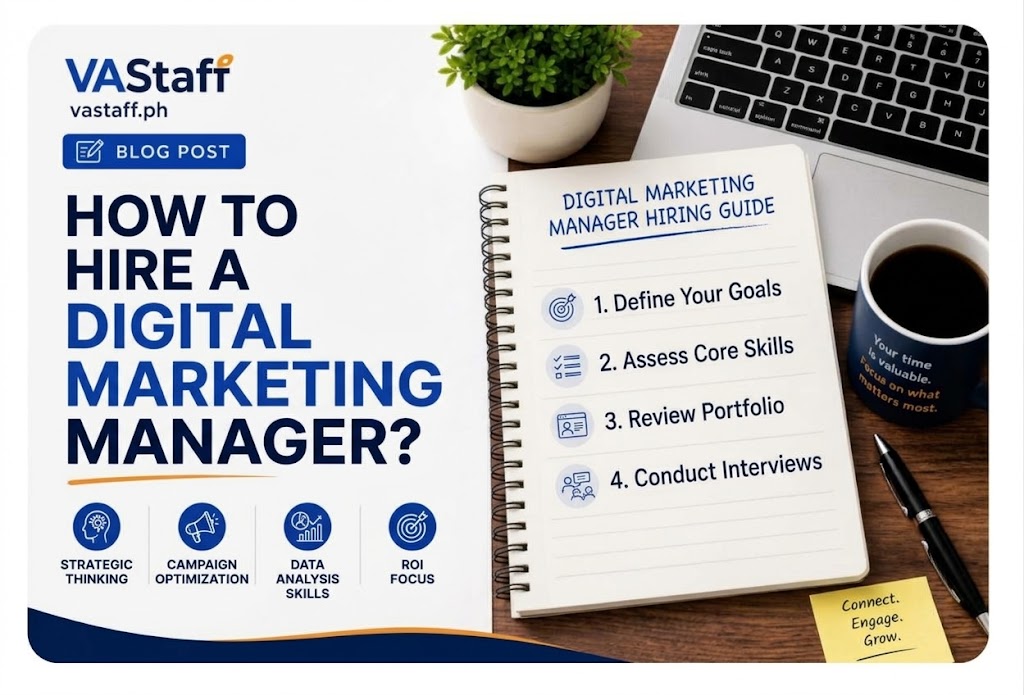
At some point, every business owner runs smack into the same wall. You started your company because you love what you do whether it’s building a product, delivering a service or helping your clients solve real problems. But at some point you became a full-time marketer as well.
You are spending your evenings staring at ad dashboards, wondering why your web traffic dipped or stressing about what on earth to post on Instagram tomorrow. When you’re trying to run your day to day business and you’re juggling social posts, ad campaigns and search engine optimizations, everything starts to slip. Marketing is one of those things that you do when you have a free hour, the flow of leads slows down and you end up exhausted.
That’s where having a Digital Marketing Manager on your team makes all the difference in your day-to-day. Imagine a digital marketing manager as your strategic leader. A person who takes marketing away from you and turns it into a predictable, reliable engine for growth. And instead of just throwing random ideas at the wall and hoping something sticks, you finally get qualified leads coming to your inbox, ad campaigns that bring real revenue and a clear game plan for your brand.
Stop doing it all. Delegate more.
Hire a vetted virtual assistant and get your week back — starting with a free discovery call.
We see this transformation all the time at VA Staff. So we put together this simple, step-by-step framework to help you find, vet and onboard a great marketing lead for your team, so you can hand off your marketing with total confidence.
Step-by-Step Framework for Hiring Your Marketing Lead
1. Establish Your Marketing Goals & Budget
Before you rush off a quick job description, take a moment to think about what your business really needs right now. Are you trying to fix broken ad campaigns that are eating up your money? Are you looking to bring more organic traffic to your website through regular blogging and SEO? Or do you start from scratch and need a complete sales funnel built out? To figure out your immediate pain points means you don’t bring on the wrong kind of help.
Then think about the setup that works for your current workload. If you have a massive operation, you may need a full-time leader. If you have a bunch of weekly campaigns, you may need a part-time manager to keep them running smoothly, or a remote specialist through a virtual assistant provider.
Once you know the setup, set a realistic monthly budget. Just remember, your budget has to account for two different things: your manager’s salary, and the active funds they need to actually do their job like software tools, design subscriptions, and ad spend.
2. Define Scope and Main Responsibilities
Setting crystal-clear expectations up front saves everyone a lot of headaches later on. It is very important that you are specific about what channels your new manager will be managing. Will it be email newsletters, Facebook ads, Google ads, social media accounts or search performance on your website?
You also want to specify what their real day-to-day role is. Is this person going to be out there writing the copy, designing the graphics and setting up the ads themselves? Or do they come in as a high-level coordinator who manages a team of freelance writers, video editors and designers?
Write down the plain weekly and monthly deliverables so you both know what success looks like and keep everyone in sync from day 1. At VA Staff, we often assist business owners in identifying the exact skills they need to easily attract candidates that get things done.
3. Seek the Right Mix of Technical and Strategic Skills
A good digital marketer is a healthy combination of hands-on technical skills and big-picture strategic thinking. On the technical side they should feel totally at home navigating tools like Google Analytics, Meta Ads Manager, search platforms like Ahrefs and your CRM. They don’t have to code but they need to be able to dig in the data, find problems, and tweak settings without being hand-held.
And outside of software skills, hire someone who knows strategy. You want someone on your team who knows how to build a full campaign, target the right audience and track real return on investment. Great marketing requires both creative ideas and data-driven discipline. So look for a candidate who can find a great storytelling angle, but also keep a close eye on campaign profitability.
4. Create a Job Description that Attracts Great People
The best marketing talent usually ignores stiff, overly formal job descriptions. Instead, craft a warm description that gives people a real feel for your company culture, values and vision. Convince applicants that your business is an exciting place to spend their working hours.
Be direct and honest about what the job entails:
- Share what specific experience you are looking for and don’t just list an unrealistic laundry list of demands.
- Show a normal workweek, as it really is, in an easy to understand way.
- Be upfront about the practicalities: working hours, remote/hybrid, performance incentives, etc.
If you’re clear and upfront about what you expect, you will naturally attract grounded professionals who are confident they can deliver.
5. Source Candidates in the Right Location
To find great people, you have to look where active marketers actually hang out. Don’t use generic, over-crowded job boards; publish your open role on niche sites, LinkedIn, and online marketing groups.
The fastest way is usually to work with specialized staffing platforms or virtual assistant providers like VA Staff, because the candidates are already vetted and have proven track records. Other than that, feel free to use your own network for recommendations, or send a nice message to marketers you’ve seen online yourself and like their work.
6. Examine Resumes and Explore Portfolios
Most resumes have a lot of buzzwords, but a marketer’s real skill is demonstrated in their previous work. Forget fancy summaries. Look at real track records in your industry or adjacent markets.
Ask top applicants to submit real case studies, live campaign examples and portfolio pieces. Specifically, you want to find evidence of growth such as a quantifiable increase in qualified lead volume, improved page conversion rates or lower customer acquisition costs. If a candidate is proud to show you real numbers, it’s usually a candidate who knows how to get real results.
7. Host an Engaging Initial Screening Interview
Get a sense of the candidate’s communication style, how they approach problem solving and what the overall team vibe is like in your first introductory chat. Observe how readily they explain marketing concepts without the confusing jargon of the industry.
Ask them how they built a campaign from the ground up, how they managed the budget and what they learned when things didn’t go as expected. Use this first chat to verify the practicalities like their availability, time zone preferences, and pay expectations to make sure you’re on the same page before proceeding.
8. Develop a Realistic Practical Assessment
Don’t rely just on verbal interview answers, give your top two or three candidates a quick, real-world task. For example, you might ask them to review a poor performing ad campaign and recommend fixes, or to map out a simple launch plan for a new offer.
See how they interpret performance numbers and what immediate actions they suggest. Keep the task short and respectful of their time (it should take no more than an hour or two) so you get a clear look at how their mind approaches everyday business challenges.
9. Run Technical and Situational Deep-Dive Interviews
Bring in the key team members in your last round of interviews to see how the candidate interacts with others. Marketing touches almost every corner of your business so making sure they communicate well with your sales or client support team is key.
Ask situational questions that are based on real situations your business has faced, such as managing a sudden algorithm change, dealing with a tight ad budget or bringing back a quiet sales channel. Watch how they follow project timelines, gather feedback and keep long-term projects moving along without a hitch.
10. Check References for Honest Feedback
Before sending over an offer letter, chat with past clients or supervisors for a few minutes. One phone call will tell you things a resume won’t.
Find out about their day to day reliability, how they took feedback constructively and if they hit targets all the time. In their interviews, make sure the wins and performance numbers they talk about are consistent with their past performance.
11. Present a Clear and Competitive Offer
When you find the right person, move quickly and make a simple, straightforward written offer. Put down their salary, hours, benefits, start date and goals for the first few months so it’s all clear.
Establish clear 30, 60 and 90-day goals that allow your new hire to walk into the role with certainty. That gives them clear milestones to focus on from day one. Keep the lines of communication open, answer any remaining questions and finalize the details so you can smoothly move into onboarding.
12. Develop a Clear Onboarding Process
A great hire can be crippled by a chaotic onboarding experience. Before Day 1, create all of the social accounts, ad managers, analytics and team communication channels.
Create a common folder with useful reference materials:
- Style notes and brand guidelines
- Historical results stats
- In-depth profiles of your target customers
- Current project notes and next steps
Schedule quick check-ins during the first two weeks to help guide them, answer questions and help them get comfortable as they settle into the team.
13. Agree on the Metrics That Really Count
Good marketing has always to connect to business growth and bottom line revenue. In month one, sit together and set clear targets around numbers that matter like Cost Per Lead (CPL), Return on Ad Spend (ROAS) and website conversion rates.
Create a basic sustainable reporting framework. A short weekly email update on status and a more detailed monthly review keep you completely in the loop without feeling like you are micromanaging their every move.
14. Provide Them with the Proper Tools and Resources
Even a star marketer will have a hard time without the right resources. Ensure your manager has access to the necessary software for social scheduling, keyword research, design and analytics.
Help them to establish smooth lines of communication between your sales reps, content creators or web developers. Most important, back them up with a small, mutually agreed-upon testing budget. Marketing is constantly testing and when they have dedicated funds to test new ad creative or copy, they can scale winning ideas much faster.
15. Continue to Refine and Test For Long-Term Growth
Digital marketing is never something you are able to set up and then forget. Encourage a workplace culture that embraces ongoing experimentation with new ad formats, fresh landing page copy and new angles.
Regularly review performance numbers together. Work together to move the budget around from the underperforming channels and spend more on the channels that actually are driving revenue. Your marketing strategy will organically evolve with ongoing adjustments and consistent communication as your business grows.
When to Hire a Digital Marketing Manager for Your Business
If you’re on the fence about whether it’s time to hire, see if any of these common warning signs sound familiar:
- Your marketing is hit or miss: You only update your site, send an email, or post to social media when you find a spare moment, which is often followed by long stretches of silence.
- You are throwing money in the dark: You pay for ads or SEO services every month, but you don’t have any real way of knowing if those efforts are actually making a profit.
- You spend unnecessary hours on small tasks: You or your sales team is wasting precious time creating graphics, writing post captions, or fixing ad settings instead of talking to clients and closing sales.
- Your lead flow has plateaued: You’ve hit a ceiling of inbound leads and you’re not sure what strategic changes are needed to break through to the next level.
- You’re managing too many individual freelancers: You have different contractors for graphic design, writing and ads, but no one is leading them or pulling them together into one coordinated strategy.
- You’re leaving obvious growth on the table: You know there are great growth opportunities out there in your market, but you just don’t have the time or bandwidth to grab them.
How to Hire a Digital Marketing Manager
That first step doesn’t have to be intimidating. Here’s a simple checklist to help you get started on your hiring process today:
- Audit your current setup: Write down everything you are doing for marketing right now and note what is broken, missing or taking up too much of your time.
- Set 2-3 core goals: Pick two or three critical goals you expect a marketing lead to achieve in their first six months.
- Set Your Budget: Determine how much you can spend monthly, factor in software tools costs, and include a small sum for testing.
- Write a basic job description: We need someone to come in and help us out. Spell out what you need.
- Defining your hiring model: Consider what makes the most sense for your operation – an in-house hire, a remote-based employee, or a dedicated virtual professional.
- Establish a simple screening process: Develop your interview questions and a short practical exercise to easily screen for real talent.
- Organize assets: Have your account logins, brand guides and past reports in one place for a smooth onboarding experience.
- Create a reporting process: Create a simple weekly update format so you always know what’s working without micromanaging.
Summary
Hiring a digital marketing manager isn’t simply handing off your daily social posts to someone else. It’s about finding a true strategic partner who can make your marketing a reliable, predictable engine of growth. The right person eliminates the guesswork from your plate, delivers a steady stream of qualified leads, and gives you back valuable time to focus on leading your business. The best place to start is to take an honest look at where you feel your marketing is stuck today, so that you can bring in the exact help you need to move forward.
Frequently Asked Questions
What’s the difference between a digital marketing manager and a marketing specialist?
The digital marketing manager is concerned with the big picture, campaign strategy, budget distribution and team coordination. But a marketing specialist is focused on doing the specific day-to-day tasks in one area writing blog posts, making social graphics, or taking care of technical SEO.
In-house digital marketing manager vs. remote virtual assistant: Who should I hire?
Really it comes down to your budget, your workspace set up and your management preferences. An internal hire gives you a person in your space, but with more overhead, office equipment costs and local salary requirements. With a provider like VA Staff, you can get a dedicated remote marketer or virtual specialist. They give you access to pre-vetted talent at a much lower cost of overhead, giving you much more flexibility and at much less risk.
What Does it Cost to Hire a Digital Marketing Manager?
Pricing will be based on level of experience, location and type of employment. With a full time, in-house manager in the US you’re looking at a salary of $65,000 to $95,000 per year, plus benefits. But hiring a dedicated remote manager or virtual assistant through an agency generally costs $1,500 to $3,500 a month, which means small businesses can get high-level strategy without the huge overhead.
What KPIs should I be measuring to find out if I’m successful?
Focus on performance numbers that directly impact business revenue, not vanity metrics like likes or followers. Measure ROAS, CPA, CPL, website conversion rates and total monthly lead volume. These numbers will tell you exactly how much your marketing investment is paying off.
How long does it take for a new digital marketing manager to show results?
You may see positive movement in the first few weeks with quick account fixes, copy updates and ad tweaks, but it takes a little time to get full campaign momentum. You should expect to see clear data, solid campaign direction and consistent lead flow within 60 to 90 days. Typically long-term strategies such as SEO and content marketing take 3 to 6 months to hit their full potential.
What's your business?
Company name and what you do — a line is plenty.
How many VAs do you need?
A rough number is fine — you can scale later.
What do you need help with?
Pick a category — you'll choose specific roles next.
Which roles do you need?
Pick any that apply — or add your own below.
How many hours per month?
Full-time or part-time — pick what fits.
Where do we send your matches?
We'll email you a shortlist of VA candidates.
You're all set!
We'll review your answers and send a list of matched VA candidates to your inbox — usually within one business day.
Or book a free call now →