
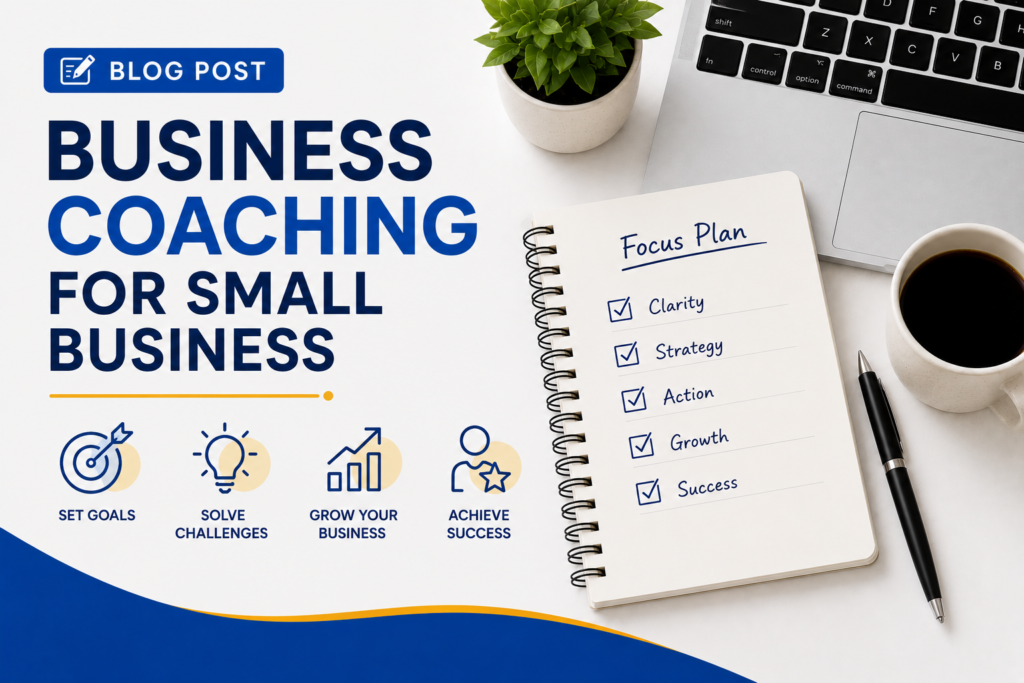
Small business owners often have to make decisions without the luxury of a management team. Business owners can get so busy doing the daily work that they forget to work on the long-term growth. When you’re swamped with daily emails, client requests, inventory checks and staff questions, it seems almost impossible to take a step back and look at the big picture.
Business coaching offers an outside perspective, structure and accountability. It brings a neutral partner into your corner, who can help you spot blind spots, challenge your routines and keep you focused on strategic goals. This practical guide will help you understand what business coaching is, what a coach does, when it makes sense to hire one and how to get maximum value from the experience.
VA Staff will share practical tips to build momentum, delegate the day-to-day administration and streamline your business model so you can step back and build a truly sustainable enterprise.
Stop doing it all. Delegate more.
Hire a vetted virtual assistant and get your week back — starting with a free discovery call.
What Is Business Coaching?
Business coaching is a partnership that helps small business owners clarify their vision, improve their operational strategy and make better long-term decisions, all with an eye toward achieving specific goals. A business coach is an unbiased advisor, a sounding board who will help you one-on-one to clarify priorities, develop actionable solutions and create real equity in your business.
Unlike an employee or co-founder, an external coach has a healthy distance from your office politics and daily firefighting. They view your company as a holistic system, assisting you in assessing everything from your overarching financial objectives to the productivity of your team on a daily basis.
It can be useful to understand how coaching differs from other forms of professional support. Coaching is about helping you to find your own answers, creating sustainable habits and keeping you on track with your long term plans. Consulting is when you pay someone to analyze a specific technical problem and hand you a done-for-you solution. Mentoring is a more informal, casual relationship where an industry veteran gives general advice and personal stories. Training is solely about teaching specific technical skills or software through direct instruction. Small business owners suffer frequently from isolation and greatly benefit from outside guidance. There’s no one to challenge your assumptions when you’re the only one running the show, and small operational mistakes can quietly add up to major roadblocks over time.
What Does a Business Coach Do?
A business coach is hands on. They help you move your company from reaction and fixing to predictable, structured growth. They start by looking beneath the surface level symptoms to find the real root causes of operational bottlenecks. Once those issues are out in the open, they help turn vague desires, such as growing the business, into precise, measurable targets, and outline step-by-step actions to ensure those goals are realistic and achievable.
A coach doesn’t just help with the high-level planning, but actively reviews your business performance. This means a coach will dig into your numbers and see what is generating steady profit and what is simply wasting cash. They assist you in finding untapped areas for growth, whether it’s tweaking pricing tiers, expanding into new markets, or optimizing workflows to remove unnecessary work in day-to-day operations. A coach gives you a simple framework for assessing risk before you take the plunge, when you have to make big decisions. Most importantly they are an unwavering accountability partner who holds you accountable to your commitments, asks the uncomfortable questions as to why you run things the way you do and makes sure long term strategic projects don’t stall out.
What Problems Can a Business Coach Help To Fix?
As small business owners grow, they tend to encounter a remarkably similar set of operational roadblocks. A good coach will systematically address these challenges in five core areas:
Sales Problems
Sales-wise, a coach helps you fix dry lead pipelines, low conversion rates, and unpredictable monthly revenue. They enhance poor follow-up systems. They restructure sales processes that depend too much on the owner’s personal charisma.
Marketing Issues
The problems of marketing often come from the absence of a unified strategy, resulting in inconsistent content creation and a poor market positioning. A coach helps you get clear positioning for your brand and spells out exactly who your ideal customer really is.
Operational Issues
Operationally, coaching addresses poor daily workflows, too much manual administration, and the complete lack of documented standard operating procedures (SOPs). They correct the bad habit of the owner to do everything themselves for simple routine.
Money Troubles
Financially, a coach will help you gain clarity on thin profit margins and poor cash-flow management. They audit untracked operating expenses that creep up over time and restructure unclear pricing models so your work stays genuinely profitable.
Management Issues
In a team setting, a coach provides structures to handle underperforming staff and establishes clear key performance indicators (KPIs). They fix breakdowns in internal communication and build a culture of business based on shared accountability.
When to Hire a Business Coach for a Small Business
Knowing when to ask for coaching can save you months of deep frustration and wasted energy. The most obvious sign is stalled revenue – your existing sales tactics stop working and you hit an invisible ceiling on growth. Or maybe you’re suffering from complete owner burnout, always feeling overwhelmed, working till the wee hours of the morning and being completely unable to take a real vacation without the daily operations coming to a screeching halt.
Disorganized operations is another big sign it’s time for help. When internal processes are chaotic, client complaints are on the rise and employee output varies wildly, an outside perspective brings immediate order. When your team has no clear weekly priorities, monthly sales seem like a rollercoaster of stress, or you’re trying to navigate a major business expansion without a clear roadmap, bringing in a business coach is usually the smartest strategic move you can make.
How Does Business Coaching Work
A typical business coaching engagement will follow a simple, repeatable cycle to take your operations from total confusion to sustainable execution. The process begins with a comprehensive business assessment, reviewing financial data, operational processes, team dynamics and baseline strategy. Second, the coach helps you to identify core bottlenecks and under-utilized strengths across your organization. Thirdly, you set specific time-bound objectives across all major departments. Fourth, you turn those high-level objectives into an actionable plan by chunking quarterly milestones into bite-sized weekly tasks. Fifth, you make tactical updates during daily operations and change company routines accordingly. Sixth, you have periodic check-ins to evaluate key performance indicators and to assess real-world progress. Finally, you use the performance data to refine your strategy, focusing on the things that work and eliminating wasted effort.
Set Objectives with Your Coach
Good coaching replaces the vague wishful thinking with the concrete targets you can track in real time. Instead of something general like, “I want more customers,” a coach helps you come up with a specific, measurable target: “Generate 50 qualified leads per month and convert at least 15% of them into paying clients.”
Goals are defined for every level of your organization with a balanced coaching strategy. On the financial side, you might want to hit $50K/month recurring revenue by Q3, or audit expenses to grow net profit margins from 12% to 18%. Customer goals are to generate 100 inbound leads a month, improve sales conversion to 20% in six months, and boost client retention to 85%. The internal targets are to hire and onboard two support roles in 60 days, reduce product delivery times from five days to three, and reduce the owner’s operational workload from 60 hours a week to 40 hours a week.
Create a Business Growth Strategy
A growth plan is a pragmatic, day-to-day plan for expanding in the market that translates your high-level strategic goals into action. In this phase your coach walks you through the building blocks of your business model to ensure your structure can handle increased volume. Start by identifying who gets the most value from your services, cutting out low-margin offerings, and overhauling your pricing structures to match real delivery costs and market value.
The growth plan also explains your customer acquisition engine. It concentrates your energy on two or three marketing channels that work well, rather than trying to be everyplace. You will create a repeatable sales process that anyone on your team can follow. You will determine future skill and hiring needs. You will enhance internal operational priorities. Setting clear quarterly benchmarks will give you a clear view of whether you’re growing at a safe, sustainable rate.
Streamline Business Processes
Raw motivation won’t grow a business but tough operational systems will. Coaching is about backend improvements that allow your business to run smoothly when you’re not in the room. That is, you write down clear standard operating procedures, automate routine invoicing and calendar scheduling software, and polish your customer onboarding flow so that new clients feel taken care of right away.
Plus, a coach will help you standardize sales pipelines, centralize weekly reporting systems so management gets a quick view of company health, and implement regular team check-ins to monitor task completion rates. Much of this structural clean-up involves off-loading repetitive administrative jobs. Freeing up the mental bandwidth to think strategically about the future is instant with the removal of low-value operational tasks from executive calendars.
Increase Sales and Lead Generation
A business coach helps you to replace random, chaotic sales efforts with a predictable step-by-step pipeline that transitions prospects smoothly from initial interest to long-term onboarding:
- Lead Generation
- Lead Qualification
- Sales Call
- Proposal
- Follow-Up
- Close
- Onboarding
You’ll methodically polish each step of the funnel to keep this pipeline flowing. You’ll learn which marketing channels generate the most high-intent inquiries and set hard criteria to filter out bad-fit prospects early on. Your coach helps you write natural conversation scripts that handle objections with ease, and set up automated follow-up reminders so deals never get dropped. Get your customer database in order and track drop-outs at each stage to quickly fix leaky sales funnels.
Build a Better Team
Your company is growing and relying only on your personal bandwidth is a major bottleneck. Coaching builds a self-sustaining workforce by writing job descriptions around clear, measurable outcomes, rather than vague duties, and creating screening frameworks that attract reliable talent in line with company culture.
With the right people in place, structured training programs will ensure that new hires are productive quickly. By setting explicit standards for quality of work, assigning clear key performance indicators to every role and having regular feedback sessions, you give your team the clarity they need to succeed. When staff are empowered to make operational decisions within their specified roles, it builds real ownership and accountability over the long haul.
Delegate Work More Efficiently
Business owners often become the biggest bottleneck in their own companies, simply because they try to hold on to everything. To delegate effectively, you need to separate operational responsibilities into three logical buckets based on who should be doing what. First, the business owner must maintain a laser focus on high-level business strategy, major capital investments, key client or vendor relationships, and overall financial oversight. Secondly, the internal team should take ownership of the core delivery of operations, execution of services, routine customer support and department project timelines. Third, fully outsourceable tasks include administrative tasks, data entry, CRM updates, lead list research, social media posting, inbox filtering, initial reporting and bookkeeping.
This framework helps to understand where dedicated remote support fits in a growth plan. When you work with a dedicated virtual assistant company like VA Staff, you can neatly outsource administrative tasks. Your business coach will help you map out strategic goals. A virtual assistant will handle the repetitive backend work that helps free up your calendar for high-level decisions.
Use KPIs to Measure Progress
Tracking real business metrics prevents you from relying on pure guesswork to make strategic choices. A simple dashboard provides total visibility across your organization:
| Department | Key Performance Indicator (KPI) | Strategic Purpose |
| Sales | Monthly Recurring Revenue (MRR) | Tracks overall income trajectory |
| Marketing | Qualified Leads Generated | Measures audience reach & attraction |
| Sales Efficiency | Proposal Conversion Rate | Tests pitch effectiveness |
| Finance | Gross Profit Margin | Protects cash health & profitability |
| Customers | Retention Rate | Measures service quality & satisfaction |
| Operations | Cost Per Job Delivered | Catches margin slippage early |
| Team | Project Completion Rate | Monitors internal work efficiency |
| Owner | Weekly Hours Worked | Prevents executive burnout |
What Goes On in a Business Coaching Session?
A productive coaching meeting is not a loose conversation, but rather a crisp, predictable structure. The standard 50-minute session starts with a review of previous commitments, five to ten minutes, to make sure that tasks agreed upon were done on time. Then you take 5 to 10 minutes to look at the core business numbers so you can make decisions based on the raw performance data. This is followed by a 15 minute discussion of immediate operational problems and pressing challenges. Then you spend 10 minutes digging into the real root causes of those issues beneath the surface symptoms. Finally, the last 10 minutes are used to identify top priorities, assign strategic actions and set solid deadlines for the coming week.
Questions to Ask Your Business Coach
Interview thoroughly before signing a coaching contract, so you’ll be sure the candidate fits your business model. See what types of businesses they work with most often and what direct operational or business ownership experience they have. Be sure to also ask about their structured coaching process for driving growth, and how they measure results and calculate ROI.
At a practical level, ask yourself how often you’ll be meeting, how long each session will last, and what kind of support will be available between calls should an operational crisis arise. Look at what they offer: direct strategic advice, or more about questioning and accountability. Finally, request references or recent case studies from similar industries and ask for a detailed breakdown of what you get for your coaching fee.
What Is the Cost of Business Coaching?
Coaching fees vary depending on experience, size of business and format of the program. Senior coaches with a history of successful exits charge more. Larger teams need more in-depth structural analysis. Weekly calls are also more expensive than bi-weekly or monthly sessions and one-on-one coaching is more expensive than group masterminds or general consulting scope.
Look at coaching through the lens of potential return on investment, not just raw hourly rates. A coach can help you fix a flawed pricing structure, close high-value accounts, or streamline operations and pays for themselves many times over.
How to Get the Most Out of Business Coaching
So get active to get the maximum return on your coaching investment. Come to every session with accurate financial records, time logs and pipeline numbers and be brutally honest about where operations are failing or where there are personal management weaknesses. Between meetings, consider action items as high priority commitments and keep metric dashboards current. Bring focused challenges to meetings instead of waiting for the coach to steer, fully test agreed changes before evaluating their success and step back regularly to review long-term growth.
Business Coach vs. Consultant
Choosing between a coach and a consultant depends on whether you need long-term skill development or immediate execution:
| Feature | Business Coach | Business Consultant |
| Core Role | Helps owner find their own solutions | Provides pre-packaged solutions |
| Primary Focus | Accountability & owner development | Implementation & technical advice |
| Method | Asks probing questions | Analyzes raw data & recommends |
| Outcome | Builds long-term leadership habits | Completes specific, project-based tasks |
| Duration | Extended, ongoing relationship | Fixed start and end dates |
Typical Errors With Business Coaching
Don’t fall into common traps such as hiring a coach without clear and measurable goals, as you won’t be able to assess success. Another big mistake is thinking the coach is going to fix everything for you, forgetting that a coach is providing the road map and the owner and team are doing the work.
Owners also get into trouble when they attend calls regularly, but don’t take action on items between sessions. The danger is just as great if you only do motivational mindset work and ignore backend processes, cash flow, and financial metrics. Finally, if you are not consistent in your approach over time, or if you choose an advisor without practical small business experience, you will soon find your progress stalled.
Is Business Coaching Worth It?
Business coaching can be a big investment of time and money, but it can also provide a great return if the situation is right. If your business has clear growth opportunities and you don’t have the bandwidth or structure to catch them, or if you’re feeling stuck in day-to-day firefighting and want to move into strategic leadership, it’s worth the investment. When you’re hitting operational bottlenecks over and over again despite internal patches, when you need firm accountability to stay on track for the long term, or when big decisions have big financial consequences without an executive advisory team in place, an outside advisor is just as valuable.
FAQs
What does business coaching mean?
Business coaching is a professional relationship where an experienced advisor partners with a small business owner to sharpen strategy, improve daily operations, establish measurable goals and ensure executive accountability.
What is a small business coach?
A coach can assist owners to identify bottlenecks in their operations, improve marketing and sales strategies, develop efficient processes, evaluate financial viability and stay focused on strategic growth rather than the day-to-day operations.
How does Business Coaching work?
It’s a series of regular and structured meetings to review key metrics of the business, discuss operational issues, update strategic plans and commit to action items before the next meeting.
Is business coaching worth the investment?
Yes, if you are actively working the strategies. Financial returns come in the form of higher conversion rates, healthier profit margins, saved executive hours and scalable operations.
How often should you see a business coach?
Typically owners meet weekly or bi-weekly to keep up momentum, but have enough time between meetings to work on action items.
What’s the difference between a business coach and a consultant?
A coach works with you to make decisions and develop management skills; a consultant provides done-for-you technical solutions or executes specific projects.
What's your business?
Company name and what you do — a line is plenty.
How many VAs do you need?
A rough number is fine — you can scale later.
What do you need help with?
Pick a category — you'll choose specific roles next.
Which roles do you need?
Pick any that apply — or add your own below.
How many hours per month?
Full-time or part-time — pick what fits.
Where do we send your matches?
We'll email you a shortlist of VA candidates.
You're all set!
We'll review your answers and send a list of matched VA candidates to your inbox — usually within one business day.
Or book a free call now →